3D Printing vs. Molding: Which Manufacturing Method Is Better for Your Project?
In the evolving landscape of modern manufacturing, two technologies often stand at the forefront for bringing ideas into reality: 3D printing and molding. A common question we encounter is, "Which is better, 3D printing or molding?" The truth is, there's no one-size-fits-all answer. The optimal choice hinges entirely on your project's specific requirements, from production volume and budget to design complexity and timeline.
This comprehensive guide will break down the key differences to help you make an informed decision.
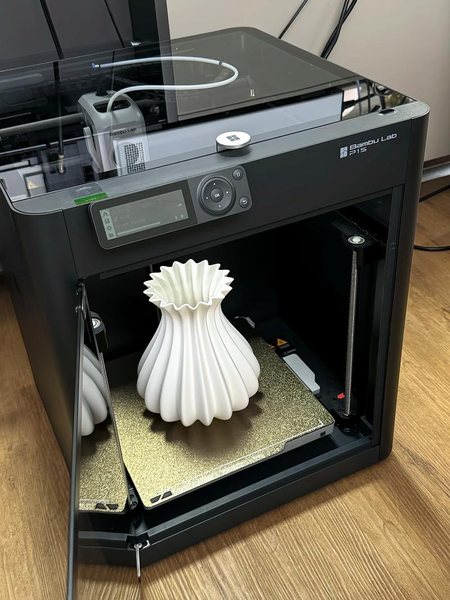
Head-to-Head Comparison: Key Differences
The core distinction lies in their fundamental processes. 3D printing (Additive Manufacturing) builds objects layer by layer from digital models, while Molding (Injection Molding is a common example) involves injecting molten material into a pre-made cavity (mold) to create identical parts at high speed.
Here’s a detailed comparison:
Feature | 3D Printing | Injection Molding |
|---|
Production Volume | Ideal for low-volume (prototypes, 1-100 parts) | Ideal for high-volume (1,000+ parts) |
Upfront Cost | Low (no tooling required) | Very high (costly mold design and fabrication) |
Lead Time | Very fast (hours or days for first parts) | Slow (weeks or months for mold creation) |
Design Flexibility | Extremely high (easily create complex geometries, customize each part) | Low (design is locked once the mold is made; modifications are expensive) |
Cost Per Part | Constant; economical for small batches | Decreases dramatically with volume; very low per-part cost at scale |
Material Selection | Wide range (plastics, resins, metals, composites), though material properties can be anisotropic | Very wide range of production-grade plastics and metals with excellent, consistent properties |
Part Quality & Finish | Can have visible layer lines; often requires post-processing | High-quality, smooth finish directly out of the mold; excellent for end-use parts |
When to Choose 3D Printing
3D printing shines in scenarios that demand speed, flexibility, and complexity without the burden of high upfront investment.
Rapid Prototyping and Iteration: Need to test a design concept in hours or days? 3D printing is unbeatable for quickly creating functional prototypes and making design changes on the fly.
Complex and Customized Designs: If your part features intricate internal channels, organic shapes, or lattice structures that are impossible to achieve with traditional molding, 3D printing is the clear winner. It is also perfect for custom medical implants, dental aligners, and personalized consumer goods.
Low-Volume & Bridge Production: For small batch production (e.g., 100 units or less), creating a costly mold is not justified. 3D printing provides a cost-effective solution for manufacturing these parts directly.
Reducing Assembly: 3D printing can consolidate multiple components into a single, integrated part, simplifying your supply chain and reducing assembly time.
When to Choose Molding (Injection Molding)
Molding is the champion of mass production, where consistency, speed, and low per-part cost are paramount.
Mass Production: Once you need thousands or millions of identical parts, injection molding becomes vastly more economical. The high initial mold cost is amortized over the massive production run, driving the cost per part down to cents.
Requirement for High Strength and Durability: Molded parts, especially from engineering-grade thermoplastics, typically exhibit superior and isotropic mechanical properties compared to most 3D printed polymers, making them suitable for high-stress applications.
Exceptional Surface Finish: If your product requires a ready-to-use, high-quality surface finish straight out of the machine, injection molding delivers. The process produces parts with excellent surface detail and consistency.
Broad Material Choice: The technology supports a vast library of production-grade materials with specific properties like heat resistance, flexibility, or UV stability.
The Verdict: It's Not a Competition, It's a Partnership
The question is not which technology is universally "better," but which is better for your specific project phase and goals.
Often, the two technologies are used in tandem throughout a product's lifecycle:
3D Printing is used for prototyping and validating the initial design.
3D Printing may be used to create the mold tools itself for short runs.
Injection Molding takes over for the final mass production of the validated design.
Conclusion
Before deciding, ask yourself these key questions:
What is my production volume?
What is my budget and timeline?
How complex is my part's design?
What are my requirements for material properties and finish?
By carefully weighing these factors, you can confidently select the manufacturing process that will most efficiently and effectively turn your vision into a tangible success.

