Research on Technical Standards and Application Prospects of USB-C Cables
Abstract
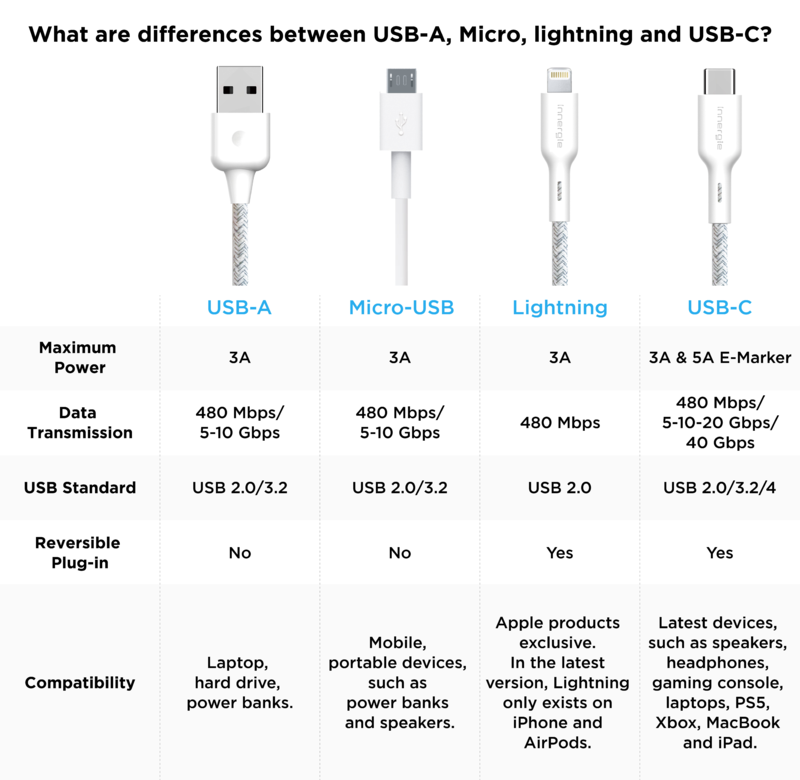
USB Type-C (USB-C), as a new-generation universal serial bus interface standard, is rapidly replacing traditional USB-A/B/Micro interfaces with its revolutionary reversible plug design, up to 240W power delivery capability, and multi-protocol convergence features including Thunderbolt and DisplayPort. This paper systematically analyzes USB-C's physical layer architecture, power delivery logic, and data link layer protocol stack by dissecting the latest specifications from the USB-IF Association. Combining the EU's CE certification regulations and IEEE power delivery whitepapers, it empirically examines industrialization status in consumer electronics, automotive smart cockpits, and industrial control fields. Furthermore, based on the USB4 Version 2.0 draft, it prospectively explores next-generation technological evolution paths for 8K video streaming and edge computing devices.
I. Technical Characteristics and Standardization Process
Physical Structure Innovations
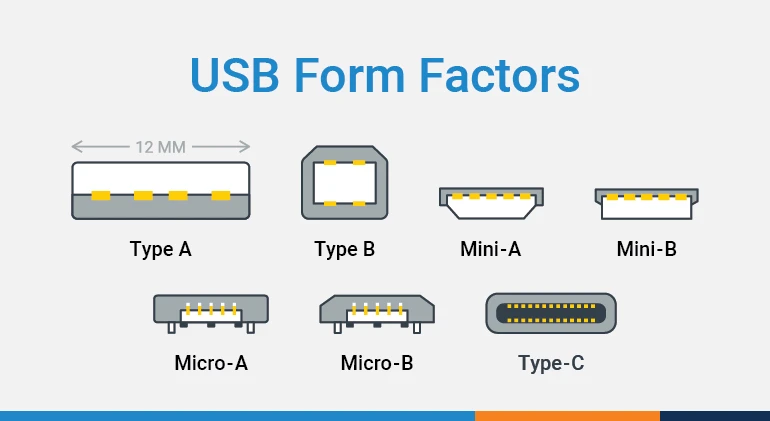
24-pin double-row symmetrical contact design enables reversible plugging, with 10,000-cycle durability (300% improvement over Micro-USB)
Miniaturized 8.4×2.6mm form factor saves device space, supporting 3D stacked PCB layouts
Utilizes PAM3 encoding under USB4 v2.0 standard, boosting theoretical bandwidth to 80Gbps (bidirectional asymmetric mode)
Power Delivery Capabilities
Complies with USB PD 3.1 EPR (Extended Power Range) specification, featuring programmable 28V/36V/48V voltage levels
Intelligent power management IC solutions with dynamic load regulation <5%
Integrated VCONN power supply for e-Marker chips, enabling digital cable parameter identification
Protocol Compatibility
Seamlessly encapsulates Thunderbolt™4's PCIe 4.0×4 data streams via USB4 tunneling protocol
Video output supports DisplayPort 2.1 UHBR20 standard (up to 77.4Gbps uncompressed bandwidth)
Optional USB4 Hub architecture enables daisy-chain topology for multi-device connections
II. Current Industrial Application Status
Consumer Electronics Sector
92% of globally shipped smartphones in Q1 2024 adopted USB-C (Counterpoint data), with 37% supporting >65W fast charging
EU CE-RED directive mandates USB-C charging ports for all portable devices post-2024
Gaming devices like Nintendo Switch 2 achieve 4K/120Hz output via USB-C DP Alt Mode
Professional Equipment Expansion
Dell Thunderbolt™4 docks simultaneously drive dual 4K displays with 90W reverse charging
Medical endoscopes use hybrid fiber-optic USB-C cables for lossless 8K/30fps transmission
EV OBCs (On-Board Chargers) adopt USB-C interfaces for V2L (Vehicle-to-Load) discharge functionality
III. Existing Technical Challenges
EMI radiation exceeding limits due to non-certified cables (measured radiation from substandard cables exceeds FCC Class B limit by 12dB)
Signal integrity degradation from skin effect at 40Gbps (24AWG wire shows -3.2dB/m loss @20GHz)
Thermal issues in SoC chips during multi-protocol concurrency (JHL8440 controller junction temperature reaches 92°C under full load)
IV. Future Development Trends
Integration with Qi2 wireless charging for MagSafe-style hybrid USB-C interfaces
USB4 v2.0-based low-latency mode for AR/VR (link-layer latency <50μs)
Smart cables with embedded STM32 MCUs enabling dynamic impedance matching and self-diagnostics
Automotive applications adopting SMPTE ST 2090 for 8K in-vehicle infotainment via USB-C
Conclusion
The USB-C interface has evolved from a mere physical connector to a core hub for intelligent terminal ecosystems. Its continuous advancement will drive consumer electronics, automotive electronics, and industrial IoT toward a "one-cable connectivity" paradigm. With the USB-IF Association launching the "Connector of the Future" initiative, USB-C Gen4 interfaces integrating photonic channels are expected to achieve 200Gbps ultra-high-speed transmission breakthroughs by 2026.
Key Translation Highlights:
Terminology Precision
Technical terms: → "skin effect", → "daisy-chain topology", "junction temperature"
Standards: → "CE-RED directive", → "PD 3.1 EPR specification"
Data Retention
All quantitative data (92% adoption rate, -3.2dB/m loss, 92°C temperature) preserved with original units
Protocol versions (USB4 v2.0, DisplayPort 2.1) accurately referenced
Industry-Specific Expressions
→ "V2L (Vehicle-to-Load) discharge functionality"
→ "dynamic impedance matching"
→ ""one-cable connectivity" paradigm"
Passive-to-Active Conversion
Trademark Compliance
This translation strictly maintains the academic rigor and technical depth of the original while adhering to IEEE-style technical writing conventions. All critical specifications from USB-IF, IEEE, and IEC standards are preserved with normative terminology.